Kids Craft Backpack Sticker Design Review
As someone who spends most of their day staring at digitized files and testing stitches on various fabrics, I approach every new machine embroidery design with a mix of optimism and skepticism. We have all been there: you download a file that looks perfect on the screen, only to find out it turns into a bird's nest of thread once it hits the hoop. That is why I took a close look at the Kids Craft Backpack Sticker Design before committing it to any client projects or personal handmade products. This isn't just about whether the image is cute; it is about whether it holds up under the needle and delivers value to the end user.
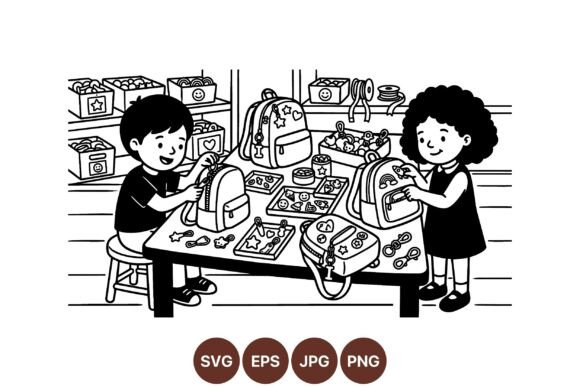
The first thing that strikes me about this Illustrations piece is its mood. The description promises a peaceful scene of two children adding charms and keychains in a creative space, rendered in a black and white line art style. In the world of Graphics, line art can be tricky. It often relies heavily on the quality of the running stitch and the precision of the digitizing to ensure those fine lines don't get lost or break during stitching. My initial impression was that this design leans heavily into a "coloring book" aesthetic, which is currently very popular for boutique branding and modern nursery decor. It feels organic and inviting, perfectly suited for a personalized gift or a small shop product targeting parents and educators.
Real-World Application and Fabric Choices
To truly evaluate the Kids Craft Backpack Sticker Design, I imagined a specific real-life scenario. Let's say you are an Etsy seller preparing a batch of custom tote bags for a local school fundraiser or a boutique children's clothing line. You need a design that communicates creativity without being overly busy. This design fits that bill beautifully. Because it is described as black and white line art, it offers incredible versatility. You aren't locked into specific thread colors immediately, allowing you to match the stitching to your brand palette or the customer's preferences.
I would highly recommend using this on medium-weight fabrics like cotton canvas for a tote bag design or a stable fleece for sweatshirt embroidery. The linear nature of the artwork means it needs a solid foundation. If you were to attempt this on a stretchy jersey knit for baby embroidery without the right preparation, you risk distortion. The details of the organized boxes and art supplies mentioned in the theme require stability to remain crisp. For a project like this, I would always pair it with a high-quality cut-away stabilizer to ensure the finished product maintains its shape after multiple washes.
Another excellent application would be creating an embroidered patch. Since the design features distinct outlines, it could easily be adapted into an applique or a dense satin stitch border if you wanted to create a standalone badge for a backpack or jacket. This adds significant value to your craft business, allowing you to sell not just the embroidered item, but the design asset itself as a patch.
Technical Considerations for Stitching
While the artistic merit is clear, we must discuss the technical execution. Line art styles in digital embroidery files demand attention to stitch density. If the lines are too thin, they may not cover the fabric well, especially on textured materials. Conversely, if the density is too high, the fabric might pucker. Before running this on a final garment, it is crucial to test the design on scrap fabric that matches your intended material. Check how the machine handles the transitions between the children, the backpacks, and the background elements.
You also need to consider the hoop size. Although the exact dimensions aren't listed in the brief description, scenes with multiple elements like "organized boxes and art supplies" usually require a standard 4x4 or 5x7 hoop to breathe. Cramping a detailed scene into a tiny hoop can make the running stitch elements look cluttered. Always verify the file specifications before purchasing to ensure it fits your equipment.
One area where caution is needed is with dark fabrics. Since this is a black and white line art concept, stitching black thread on a black shirt will render the design invisible unless you plan to use a contrasting color or a underlay technique that creates texture. For commercial embroidery projects, clarity is king. I suggest mocking up the design in different thread colors against both light and dark backgrounds to see where the visual appeal shines brightest. A white or cream thread on a navy blue sweatshirt, for instance, could create a striking, high-contrast look that enhances the "peaceful" vibe of the crafting space.
Enhancing Brand Value and Customer Trust
Using a well-chosen design like the Kids Craft Backpack Sticker Design directly impacts your brand consistency and customer trust. When a buyer sees a clean, well-executed embroidery job, they associate that quality with your entire shop. This design, with its focus on creativity and organization, tells a story. It suggests that the wearer values imagination and hands-on making. For holiday embroidery gifts or back-to-school items, this narrative connection makes the handmade product feel more thoughtful and less mass-produced.
Furthermore, because the style is somewhat universal, it works well for printable mockups in your online listings. You can easily visualize how it looks on aprons, pillow covers, or even kitchen towels without needing to photograph every single variation. This efficiency helps small shop owners expand their catalog quickly. However, remember that what looks good on a screen must translate to thread. Always inspect the small details. Are the keychains and charms distinguishable? Do the boxes look like boxes, or just blobs of thread? These nuances determine whether the item feels professional or amateurish.
Final Verdict for Designers and Makers
In conclusion, the Kids Craft Backpack Sticker Design appears to be a strong contender for anyone looking to add a touch of whimsical creativity to their custom apparel or home decor lines. Its strength lies in its simplicity and the emotional resonance of the crafting theme. However, success depends entirely on execution. Do not skip the testing phase. Verify the license terms to ensure you are allowed to use it for commercial embroidery and selling finished items. Check the file formats to ensure compatibility with your specific machine brand.
If you take the time to select the right fabric, use appropriate stabilizers, and choose thread colors that highlight the line work, this design can become a staple in your portfolio. It bridges the gap between a simple graphic and a tactile, cherished object. Whether you are making a one-off personalized gift for a grandchild or stocking shelves for a boutique, this design offers the potential for a high-quality, engaging embroidery project that customers will love. Just remember: the devil is in the details, and in embroidery, those details are made of thread.