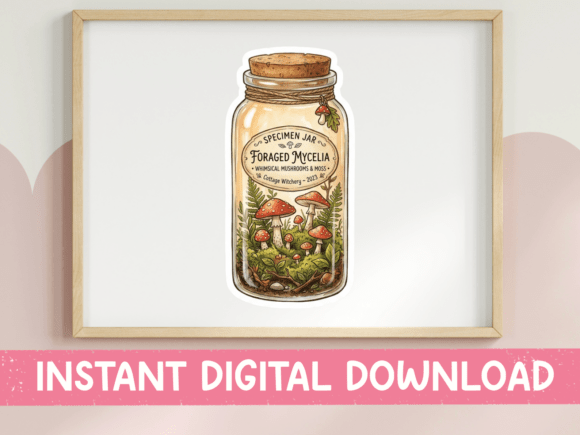
Review: Foraged Mycelia Specimen Jar SVG for Embroidery
As a designer who spends more time staring at stitch maps than most people care to admit, I approach new digital embroidery file acquisitions with a healthy dose of skepticism. We have all been burned by beautiful vector art that turns into a tangled mess of thread breaks and puckering once it hits the machine. So, when I first pulled up the Foraged Mycelia Specimen Jar SVG, my initial reaction was purely visual. The concept—a vintage glass apothecary jar corked at the top, housing small red mushrooms, ferns, and moss—is undeniably charming. It taps directly into that cottagecore aesthetic that has dominated social media feeds for years. However, seeing a graphic on a screen and stitching it onto fabric are two entirely different disciplines.
The layout features a hand-drawn label reading "SPECIMEN JAR," "Foraged Mycelia," "MEDICAL MUSHROOMS," and "MOSS." From a composition standpoint, this works beautifully as a centered motif. The vertical orientation of the jar makes it an ideal candidate for left-chest logos on jackets or a central focal point on tote bags. But before I committed to a full production run for a client's boutique line, I needed to understand how this machine embroidery design would behave under the needle.
Visual Personality and Stitch Translation
The mood this design creates is one of scientific curiosity mixed with woodland whimsy. It feels like something you would find in an old herbalist's shop. When translating this from a T-Shirt Designs category graphic to actual thread, the challenge lies in the detail level. The description mentions "small red mushrooms" and "ferns." In a standard Graphics format, these look crisp. In embroidery, tiny details can easily get lost if the stitch density isn't managed correctly.
If this file is set up as a standard fill design, the moss and fern elements will require careful attention. Dense areas of green can become stiff and board-like if the underlay isn't sufficient. Conversely, if the design utilizes a mix of satin stitch for the jar outline and fill stitch for the interior botanicals, it could offer a lovely textural contrast. The red mushrooms provide a necessary pop of color, but their size relative to the jar suggests they might be best rendered with simple column stitches or even a running stitch outline if the scale is reduced. For larger applications, like a back patch, there is room for more complexity, but for smaller hoops, simplification might be necessary to maintain clarity.
Real-World Application: The Boutique Tote Scenario
To truly test the viability of the Foraged Mycelia Specimen Jar SVG, I imagined a specific project: a custom order for a local herbalist shop needing branded merchandise. They wanted a durable, washable tote bag design that communicated their natural, organic brand values. This design fits that brief perfectly. The apothecary jar theme aligns with their product packaging, creating strong brand consistency.
In this scenario, I would likely choose a heavy canvas fabric. The structure of the canvas supports the weight of the embroidery better than a flimsy cotton. Using the jar design here adds perceived value; it doesn't look like a cheap iron-on transfer but rather a crafted handmade product. Customers are willing to pay a premium for items that feel artisanal. The "Medical Mushrooms" text on the label adds an educational touch that appeals to the target demographic. However, I would advise checking the legibility of the smaller text ("Cott" or similar cutoff text mentioned in the description) before finalizing the digitizing. If the letters are too tight, they will fill in with thread after the first wash, rendering the text unreadable.
Versatility Across Product Types
Beyond tote bags, this design has significant potential across various custom apparel and home goods. Here is how I see it performing in different contexts:
- Sweatshirt Embroidery: Placed on the front of a heather grey crewneck, the vintage vibe shines. The texture of the fleece complements the organic subject matter.
- Embroidered Patch: This is perhaps the strongest use case. Digitizing this as an applique or merrow-edge patch allows customers to apply it to denim jackets, hats, or backpacks later. It expands the market for the design significantly.
- Kitchen Towels and Aprons: For the culinary enthusiast who loves foraging, this makes a fantastic personalized gift. Just ensure the thread colors are colorfast, as kitchen linens undergo frequent washing.
- Nursery Decor: The gentle nature themes work well for baby embroidery projects, such as a wall hanging or a blanket border, provided the stitch count isn't too high for delicate fabrics.
- Holiday Embroidery: While not explicitly Christmas-themed, the red mushrooms and greenery fit seamlessly into winter holiday gifting, especially for those who prefer non-traditional decor.
Technical Considerations and Fabric Constraints
While the artistic merit is high, practical execution requires caution. Not every surface is suitable for the Foraged Mycelia Specimen Jar SVG. If you are working with stretchy fabrics like jersey knits for T-Shirt Designs, you must use a high-quality cutaway stabilizer. The jar has straight, rigid lines; if the fabric stretches and the embroidery does not, the design will distort, making the glass look warped.
Curved surfaces present another challenge. Attempting to stitch this detailed jar onto a structured cap is possible but risky. The corked top and the flat label area need a relatively flat plane to sit correctly. On a curved crown, the perspective of the jar might look odd, and the small lettering could become difficult to read due to the curvature. Similarly, textured fabrics like thick wool or looped towels can obscure fine details. The ferns and moss, which rely on intricate shapes, might blend into the fabric texture, losing their definition.
Dark fabrics require a different approach. The original graphic likely assumes a light background. If stitching onto black or navy, you may need to adjust the thread colors or add a backing layer to prevent the dark fabric from showing through the lighter greens and reds. A white underlay or even a fabric applique base could solve this, turning the project into a true applique design rather than just direct stitching.
Designer Notes for Commercial Success
For Etsy sellers and craft business owners looking to add this to their inventory, due diligence is key. Before listing finished items or selling the design assets themselves, verify the licensing terms. Can you sell the physical finished product? Can you sell the digital file? These distinctions are critical for avoiding legal issues.
Always test the design on scrap fabric identical to your final material. Check the hoop size requirements; while the jar is vertical, ensure your machine's hoop can accommodate the height without re-hooping, which can lead to alignment issues. Review the stitch sequence. Does the machine stitch the outline of the jar before filling the inside? This prevents the fill from pushing out the boundaries. Also, inspect the small corners of the label text. Sharp corners in embroidery often need tie-offs or specific stitch angles to prevent bunching.
Finally, consider the presentation. A great design deserves great photography. Create printable mockup files or stage real photos of the embroidered item in a natural setting—perhaps next to some dried flowers or on a wooden table—to enhance the "foraged" narrative. This attention to detail builds customer trust and elevates the perceived quality of your small shop product.
In conclusion, the Foraged Mycelia Specimen Jar SVG is a potent tool for the creative entrepreneur. It bridges the gap between digital convenience and tactile craftsmanship. With the right fabric choices, proper stabilization, and a keen eye for detail, it can transform a simple garment into a storytelling piece. It is not just a graphic; it is an invitation to create something tangible, durable, and deeply connected to the natural world. Whether you are decorating a single holiday gift or launching a new line of commercial embroidery products, this design offers a solid foundation for success, provided you respect the technical limits of the medium.